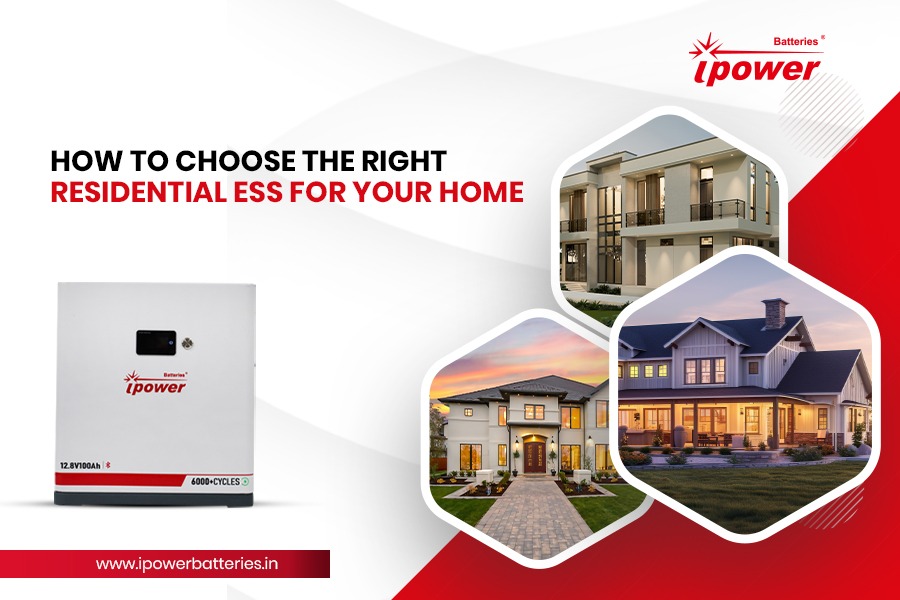
Choosing a Residential ESS isn’t just about buying a backup system for your home. It’s about finding a solution with a long term goal. It provides a dependable power solution that quietly supports your home every single day. With frequent voltage drops and unpredictable outages, homeowners now want something stable, safe, and smart. That’s why residential ESS made with advanced lithium-ion technology and trusted brands like Ipower, a leading Energy Storage System Supplier, have become the preferred choice.
But with so many models and features in the market, how do you decide what’s right for your home? The guide to this question lies in this blog.
1. Start by Understanding Your Household’s Actual Power Requirements
This is always the first step because everything else depends on it. Notice how your home uses electricity on a regular day. Do you only run essentials during outages, or do you still need heavy appliances? A residential ESS made with advanced lithium-ion technology works best when the actual power requirement is calculated correctly.
Once you know your average load, you can easily judge what capacity residential ESS will fit your home. This also helps you understand why lithium-ion batteries perform better, They handle both small and high loads without losing efficiency.
2. Move to Battery Chemistry: Where Lithium-Ion Clearly Leads
After understanding your usage, the next logical question is: which battery type handles those needs well? For almost every home today, lithium-ion technology stands far ahead. It’s lighter, safer, lasts longer, and offers higher usable energy. This is why Ipower, an experienced lithium-ion battery supplier in India, recommends lithium-based ESS for residential setups. Once you understand the chemistry, the rest of the choices become easier and less confusing.
3. Evaluate Safety Features That Match Residential Environments
Now that you know lithium-ion fits your needs, the next thing is safety. An ESS stays inside your home, sometimes running for hours. So safety features matter like BMS protection, cell balancing, thermal control, enclosure strength. Ipower’s systems use multi-layer protection because, as a dependable Energy Storage System Supplier, safety is built into their design, not added later.
4. Compare Real Performance: Efficiency, Backup Time & Charging Speed
Once safety checks out, look at the numbers that actually change your day-to-day experience. Residential ESS engineered with advanced lithium-Ion technology offer better efficiency and faster charging, meaning your residential ESS is ready even when outages happen frequently. Ipower, being a reliable Lithium-ion Battery supplier in India, will help you understand usable energy, discharge rate, and depth of discharge
5. Finally, Check Service Support and Brand Reliability
After evaluating performance, the final step is choosing a brand that stays with you after installation. A Residential ESS is a long-term investment, so service network, warranty clarity, and response time matter. Ipower’s wide support network and engineering-backed systems make them a trusted choice for homeowners who want a dependable partner, not just a product.
Last Thought
If you are looking to power your home with long term reliability then you must take all these points into consideration.
All these factors like understanding your usage, choosing the right chemistry, verifying safety, comparing performance, and confirming brand reliability, With Residential ESS designed with advanced lithium-ion batteries and reliable engineering, Ipower stands out as an Energy Storage System Supplier that truly understands Indian households and their real power challenges.
FAQ
Q1: Can I expand my ESS?
Yes! You can easily scale it as your energy needs grow.
Q2. How do I know if ESS is right for my household?
Just think about how much power you need. If it’s just lights during outages or more, that’ll help pick the right system
Q3: Will it work if the power goes out often?
Definitely! It charges fast and is ready whenever the power cuts arrive.