
When people compare EV batteries, the conversation almost always starts — and too often ends — with two numbers: capacity (kWh) and price. But ask any battery engineer what separates a pack that performs reliably for five years from one that fails (or worse, catches fire) in its first summer, and the answer is usually the same: the Battery Management System, or BMS.
At Ipower Batteries, we design and manufacture lithium-ion packs for two-wheelers, three-wheelers, telecom towers, and energy storage systems at our facility in Kundli, Haryana. Across every one of those applications, the BMS is the component we obsess over the most. Here is why you should too.
What a BMS Actually Does
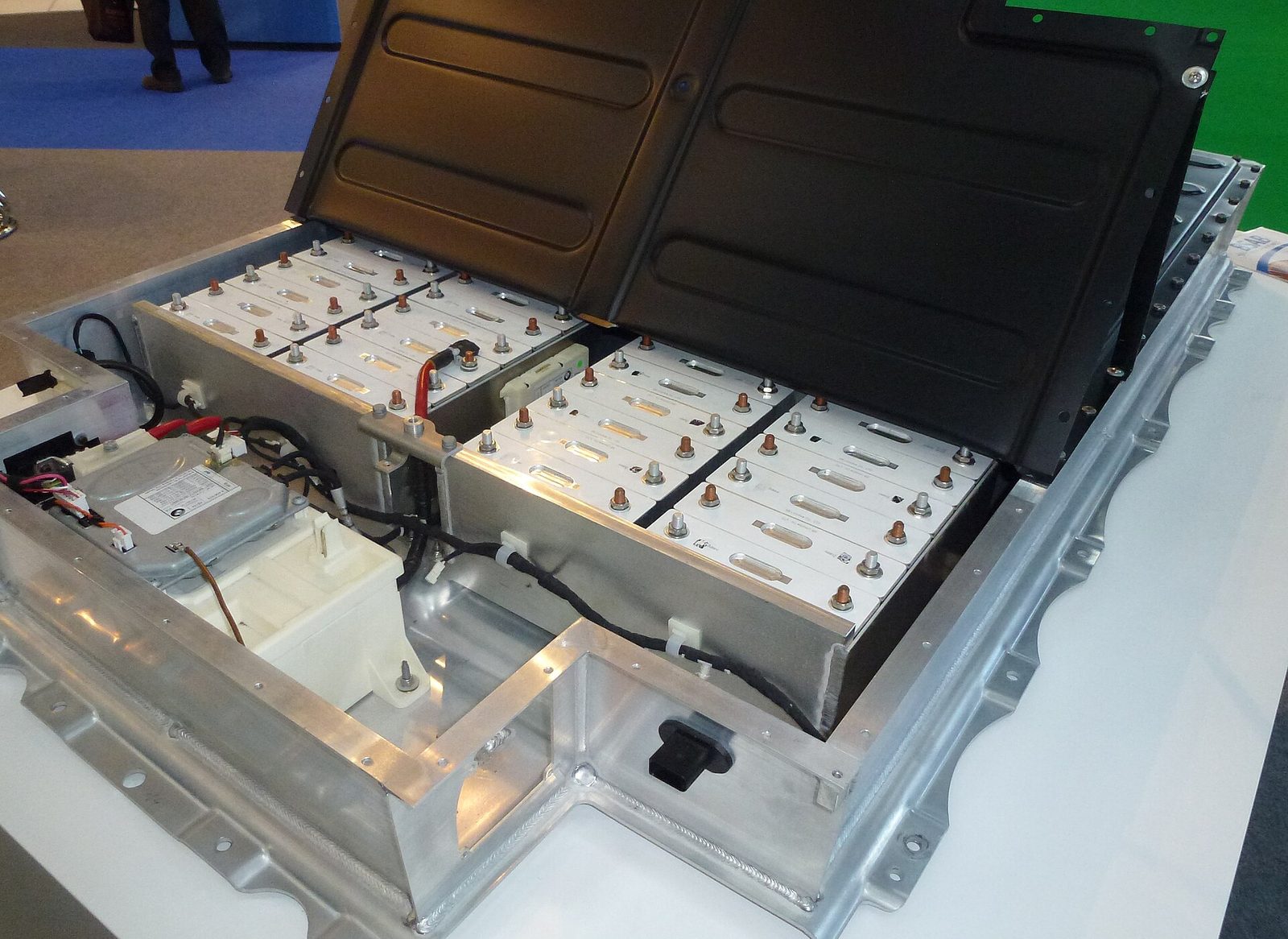
A lithium-ion battery pack is not one battery — it is dozens or hundreds of individual cells connected in series and parallel. Each cell has its own personality: slightly different internal resistance, slightly different capacity, slightly different ageing behaviour. Left unmanaged, these small differences compound into big problems.
The BMS is the electronic brain that keeps the whole pack in harmony. Its core jobs:

1. Voltage Monitoring and Protection
Every lithium cell has a safe voltage window. Overcharge a cell and you risk lithium plating and thermal runaway; over-discharge it and you cause permanent capacity loss. The BMS monitors every cell group in real time and disconnects the pack before either limit is breached.
2. Cell Balancing
Over hundreds of cycles, cells drift apart in state of charge. Without balancing, the weakest cell limits the entire pack — you effectively pay for capacity you can never use. The BMS actively equalises cells during charging, keeping usable capacity high throughout the battery’s life.
3. Temperature Management
Indian operating conditions are brutal: 45°C summers, packed traffic, direct sun on parked vehicles. Temperature is the single biggest accelerator of battery ageing and the primary trigger of safety incidents. A properly designed BMS reads multiple temperature sensors across the pack and derates charging or cuts power before cells enter dangerous territory.
4. Current and Short-Circuit Protection
Stalled motors, wiring faults, and water ingress can all cause dangerous current spikes. The BMS reacts in milliseconds, isolating the pack before damage occurs.
5. State Estimation
Accurate State of Charge (SoC) and State of Health (SoH) estimation is what makes the “fuel gauge” trustworthy. A poor BMS that reports 30% charge when the pack is nearly empty strands drivers; a good one lets fleet operators plan routes with confidence.
Why AIS-156 Changed the Game in India
After a series of EV fire incidents in 2022, the Government of India tightened battery safety norms through AIS-156 Amendment III, rolled out in two phases (December 2022 and March 2023). The standard mandates, among other things:
- Cell-level and pack-level safety testing (overcharge, over-discharge, short circuit, thermal propagation)
- Mandatory BMS functionality requirements
- Traceability of cells and pack components
- Audible warnings and thermal event containment

Ipower Batteries was among the first Indian manufacturers to clear AIS-156 (Amendment III) Phase 2 and receive ICAT certification for both our NMC and LFP battery ranges — covering 1.5–4 kWh packs for two-wheelers and 5–10 kWh packs for three-wheelers. Beyond the lab, our compliant packs were validated with over 40,000 km (NMC, 2W) and 60,000 km (LFP, 2W and 3W) of on-road testing before reaching customers.
That distinction matters. Lab certification proves a design can pass tests; road validation proves it survives reality — potholes, vibration, dust, monsoon, and drivers who push vehicles to their limits.
The Hidden Cost of a Cheap BMS
The market is full of imported, low-cost packs with rudimentary protection boards masquerading as BMS units. The symptoms show up predictably:
- Rapid capacity fade — no balancing means the weakest cell drags the pack down within months.
- Inconsistent range — poor SoC estimation makes the gauge unreliable.
- Charging failures in summer — no thermal derating means either dangerous charging or constant cut-offs.
- No diagnostics — when something goes wrong, the service centre has no data to work with, so “repair” becomes “replace”.
A cheap BMS can shave a few thousand rupees off the pack price and cost the owner far more in lost life, lost range, and safety risk.
Smart BMS: From Protection to Intelligence
The next generation of battery management goes beyond protection. IoT-enabled smart BMS platforms — an area Ipower has invested in heavily — enable:
- Remote diagnostics: service teams see fault codes and cell data before the vehicle reaches the workshop, slashing turnaround time.
- Fleet analytics: operators track battery health across hundreds of vehicles and plan replacements proactively instead of reactively.
- Theft and misuse alerts: geofencing and abnormal-usage detection protect high-value assets.
- Warranty transparency: usage data makes warranty claims faster and fairer for everyone.
Combined with our authorised service centre network across India, this intelligence turns battery service from a multi-week ordeal into a same-day, local experience — the single biggest trust-builder in the EV ecosystem, as our dealer partners tell us again and again.

What to Ask Your Battery Supplier
Whether you are an OEM, a fleet operator, or a dealer, put these questions to any battery manufacturer:
- Is the pack AIS-156 Amendment III Phase 2 certified, with a verifiable ICAT certificate?
- Does the BMS provide active cell balancing, or only basic protection?
- How many temperature sensors are in the pack, and what is the thermal derating strategy?
- Is there data logging the service network can access?
- What on-road validation has the design completed in Indian conditions?
If a supplier hesitates on any of these, keep looking.
Conclusion
The cell chemistry gets the headlines, but the BMS delivers the promise — of safety, of longevity, of the range printed on the datasheet. It is the difference between a battery that is merely certified and one that is genuinely dependable.
Ipower Batteries builds every pack around this principle, at an IATF 16949-certified facility with a government-recognised in-house R&D centre. Because in electric mobility, trust is built one safe kilometre at a time.
Evaluating EV battery suppliers? Ask us for our AIS-156 Phase 2 certificates and road-validation data.