
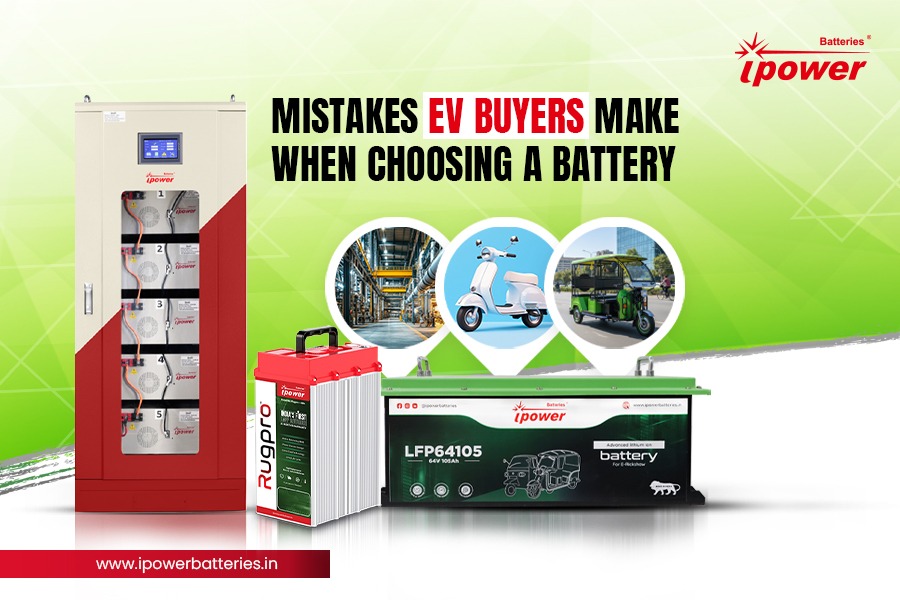
When people buy an electric two-wheeler or e-rickshaw, they usually focus on the vehicle. The design. The price. The mileage claim on the brochure.
The battery? That often becomes an afterthought. And honestly, this is where most EV buyers go wrong. Range dropping too fast. Battery heating up. Vehicles sitting idle when they should be earning. In this blog by Ipower, a trusted EV battery manufacturer in India, let’s talk about the most common mistakes buyers make while choosing an EV battery.
1. Buying the Cheapest Battery Available
This is probably the most common trap. A lower price feels like a win on day one. But a few months later, problems like shorter range, slower charging, etc rise. Lithium-ion batteries are not all built the same. Cell quality, internal design, and protection systems matter a lot. A well-built battery runs smoothly for years. A poorly built one starts showing fatigue early.
That’s why brands like Ipower, a reliable EV battery manufacturer in India, focus on long-term performance, not just upfront cost, especially for two-wheelers and three-wheelers that run daily.
2. Not Asking About the BMS
Many buyers nod when the seller says “BMS included” and move on. Big mistake.The Battery Management System is basically the brain of a lithium battery. Without a smart BMS, the battery doesn’t know when to stop charging, how to balance cells, or how to react to heat.
Ipower, a well known EV battery manufacturer in India, offers batteries with advanced BMS that constantly monitors temperature, voltage, and current.
3. Ignoring IoT Features
This one surprises people. Many EV owners don’t realize how useful IoT-enabled batteries are until something goes wrong. Without data, you’re guessing. With IoT, you know. Battery health, usage behavior, charging habits, everything becomes visible. For individual users, it helps avoid sudden failures.
Ipower’s IoT integration gives real-time insights, which means fewer surprises and better control.
4. Assuming All Lithium Batteries Are “More or Less the Same”
They aren’t. Two-wheelers and three-wheelers have very different power demands. A battery designed for light personal use won’t survive commercial operations for long. Application-specific design matters.
5. Forgetting About Support After the Sale
This is the mistake people only realize when they need help. No clear service process. No technical guidance. No one answering calls. A battery isn’t just a product. It’s a system. Good after-sales support makes a real difference over time. Ipower, a reputable EV battery manufacturer in India, backs its technology with structured support and clear communication, so users aren’t left stranded.
Final Thought
An EV battery isn’t just something that sits under the seat. It decides how far you go and how confidently you work. Choose it carefully. Your EV experience depends on it more than you think.
FAQs
1. How does IoT help EV users in daily life?
It helps track battery health, prevent misuse, and detect issues early—before breakdowns happen.
2. Are Ipower batteries suitable for commercial EVs?
Yes. They are designed specifically for daily-use two-wheelers and three-wheelers.
3. Does a better battery really increase income?
For commercial users, absolutely. Less downtime means more working hours.
4. How long can a good lithium-ion battery last?
With proper usage, lithium-ion batteries can last several years with consistent performance.