
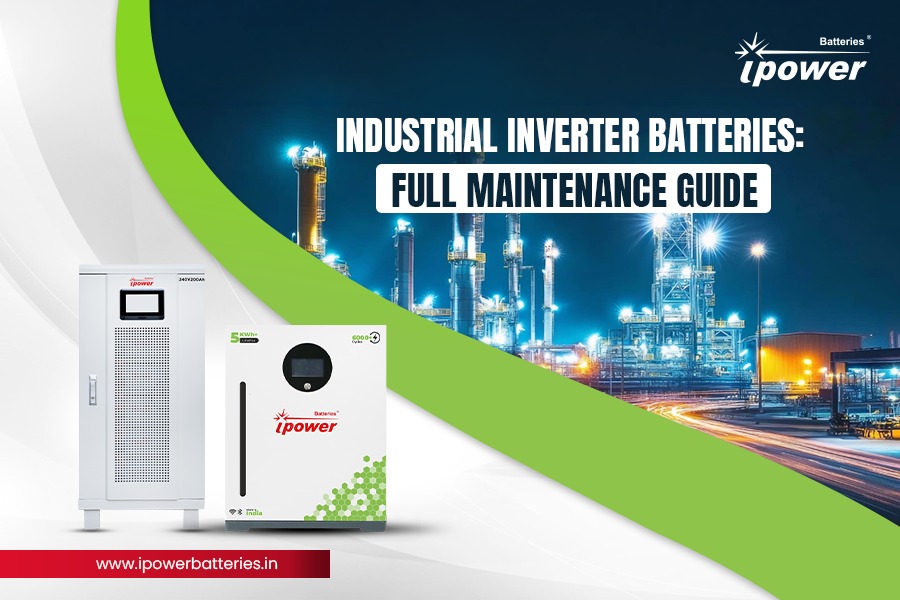
An Industrial inverter battery is build specifically for heavy workloads, long operation hours and intense working conditions. However even the best of the inverter batteries fail if they are not properly maintained.
In industrial settings like factories or manufacturing facilities, if power cuts off and even the inverter battery fails, it can cost significant loses and downtimes and operational delays. Thats what makes regular care a must.
This guide outlines the practical steps required to extend battery life and ensure reliable backup.
1. Keep the Area Near The Battery Clean and Well Ventilated
Industrial batteries generate heat when they are being used or being charged. Bad ventilation can cause the battery to overheat, which decreases the battery’s lifespan.
Maintenance tips:
- Install batteries in a well-ventilated room
- Avoid placing them near heat sources
- Keep dust and debris away from terminals
- Clean terminals regularly to prevent corrosion
Heat is one of the main reasons an Industrial Inverter Battery degrades early.
2. Check Water Levels in Tubular Batteries
If you are using flooded tubular Industrial Inverter Battery systems, water levels must be monitored.
- Check electrolyte levels every 1–2 months
- Use only distilled water
- Never overfill cells
- Do not allow plates to remain exposed
Low water levels can permanently damage internal plates and reduce capacity.
3. Monitor Voltage and Load Conditions
Overloading reduces the lifespan of any Industrial Inverter Battery.
Best practices:
- Ensure connected load does not exceed inverter rating
- Regularly check battery voltage levels
- Use monitoring systems for real-time performance tracking
- Avoid deep discharging frequently
Consistent deep discharge cycles can significantly shorten service life.
4. Avoid Complete Discharge
Industrial operations often demand extended backup. However, fully draining an Industrial Inverter Battery regularly can reduce its lifespan.
- Maintain at least 20 percent charge when possible
- Recharge immediately after power restoration
- Avoid leaving the battery in a discharged state
Controlled discharge cycles extend durability.
5. Perform Regular Equalization Charging
Equalization charging helps balance voltage across cells in large Industrial Inverter Battery banks.
- Schedule equalization periodically as recommended
- Do not overdo it
- Follow manufacturer guidelines
This process improves performance consistency across battery cells.
6. Inspect Cables and Connections
Loose or corroded connections reduce efficiency and create safety risks.
- Tighten all terminal connections
- Inspect for cable wear
- Replace damaged wires immediately
- Use proper insulation
Electrical resistance from poor connections generates unnecessary heat.
7. Schedule Professional Servicing
Even with in-house monitoring, periodic inspection by trained technicians is recommended.
Professional servicing ensures:
- Internal component health
- Load testing accuracy
- Early detection of performance decline
Manufacturers like Ipower recommend periodic checkups to maintain warranty compliance and long-term reliability of your Industrial Inverter Battery system.
Common Mistakes That Reduce Battery Life
- Ignoring maintenance schedules
- Allowing excessive heat buildup
- Running continuous overload conditions
- Skipping water refills in tubular systems
- Delaying repairs
Industrial battery systems require discipline in maintenance planning.
Conclusion
An Industrial inverter battery is a long term investment for any industrial operation. While these batteries are built to last for long times, but bad maintenance can affect that significantly. Schedules inspections, proper ventillation, and on time servicing can boost the life of battery and prevent unforeseen breakdowns.
FAQ
1. How often do I need to put my battery for servicing?
Scheduled checkups should be done every now and then and professional servicing at 1 or 2 times a year.
2. What reduces Industrial Inverter Battery life the most?
Excess heat, overloading, and deep discharge cycles are the main causes of early failure.
3. Is equalization charging necessary?
Yes, for large battery banks it helps maintain balanced cell performance.
4. Can improper ventilation damage industrial batteries?
Yes.
5. How long does an Industrial Inverter Battery usually last?
With proper maintenance, industrial batteries can last several years depending on usage intensity.