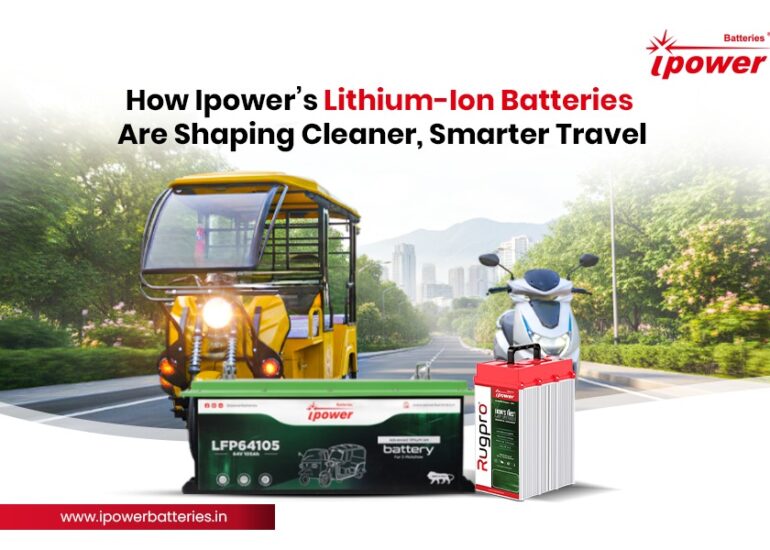

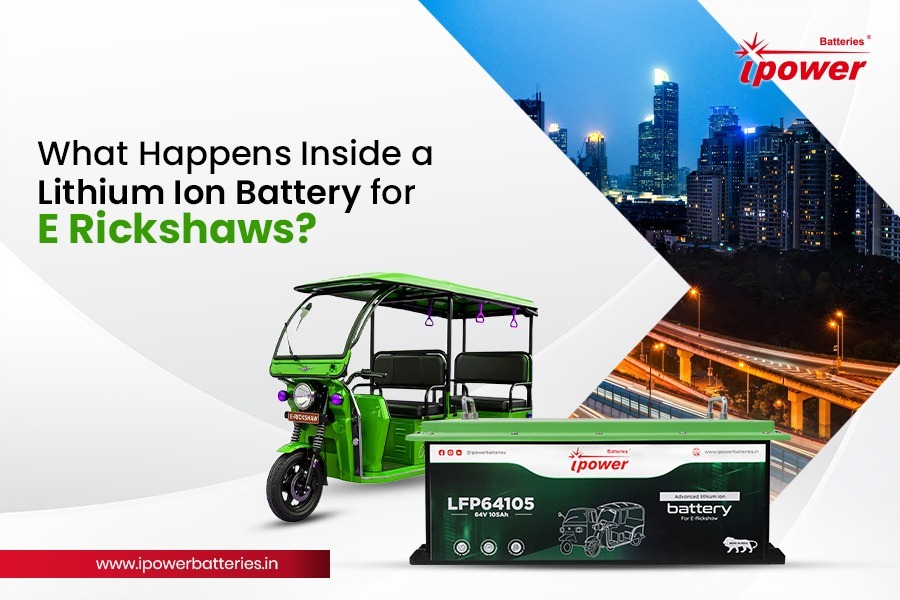
E-rickshaws, aren’t they just everywhere? Like, if you step out, within a few minutes, one will be passing by. For many, they’ve become the most convenient mode of transport after buses or metro.
But let’s consider this, which, I think, most people don’t actually think about: what’s powering these things?
One answer, Lithium Ion Batteries.
And honestly, what’s going on inside them is way more interesting than it sounds at first.
Inside Lithium Ion Batteries
A lithium battery is not just a big block. It has a number of small components called cells.
A cell is like power in a very small case. Alone, not that impressive. But put a lot of them together, and now you’ve got something strong enough to run an vehicle.
There are 3 parts in a cell:
- Anode
- Cathode
- Electrolyte
And the real stars here are lithium ions. Tiny particles, constantly moving back and forth. That movement is what stores energy and then gives it back when needed.
What Happens During Charging?
When you plug in an e-rickshaw, the battery starts “filling up” Not with some fuel obviously, but with stored energy.
Here’s what’s happening inside:
- Lithium ions move from the cathode to the anode
- Energy gets stored in the battery
It’s kind of like prepping for the next day. You’re just loading up energy so the vehicle can run later without stopping every hour.
And for e-rickshaw drivers, this part really matters. If charging is slow or unstable, that’s time lost. Fewer trips. Less earning. So yeah, charging speed is a big deal.
Discharging: Turning Stored Energy into Motion
Now the moment the e-rickshaw starts moving, everything flips.
- Lithium ions go back from the anode to the cathode
- That movement creates electricity
- The motor uses that electricity
And this keeps happening continuously while the vehicle is running. Back and forth, again and again. You don’t see it, but it’s doing all the work.
Every ride, every passenger, every stop. All because of this cycle.
How a Lithium Ion Battery for E Rickshaw Is Built
One cell alone won’t get you very far. Not even close.
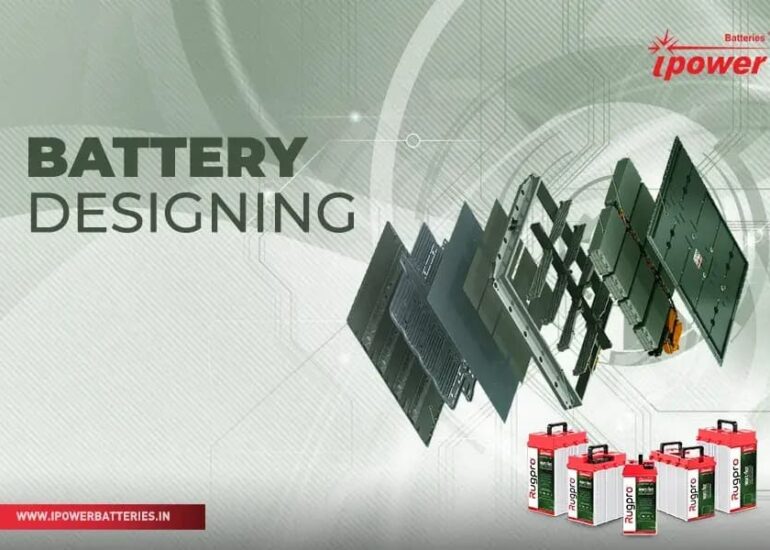
So what do manufacturers do? They combine a lot of cells into modules, and then those modules are packed together into a full battery.
A good lithium ion battery for e rickshaw is built keeping real-life usage in mind. Not lab conditions. Actual roads, daily wear and tear, long hours.
Usually, the goal is to give:
- A decent driving range
- Stable power, no weird drops
- Durability over time
Some batteries do this really well. Some… not so much. A lot depends on how the battery pack is designed.
The Role of the Battery Management System (BMS)
Now imagine all these cells working together without any control. Sounds messy, right? That’s where the BMS comes in.
Battery Management System. Fancy name, but the job is pretty straightforward.
It:
- Keeps track of temperature and voltage
- Stops overcharging or deep discharge
- Balances all the cells
- Makes sure things don’t go wrong
Without a BMS, even a good battery can run into trouble pretty quickly. So yeah, it’s a small part with a big responsibility.
Why Lithium Ion Batteries Are Preferred for E-Rickshaws
Over time, Lithium Ion Batteries have basically become the first choice for e-rickshaws.
And it makes sense:
- They charge faster
- They last longer
- They’re lighter
- They don’t need much maintenance
- They’re more efficient overall
If a vehicle is running most of the day, these things matter a lot. Nobody wants to keep stopping or fixing stuff all the time.
EV Battery Manufacturers in India and the Road Ahead
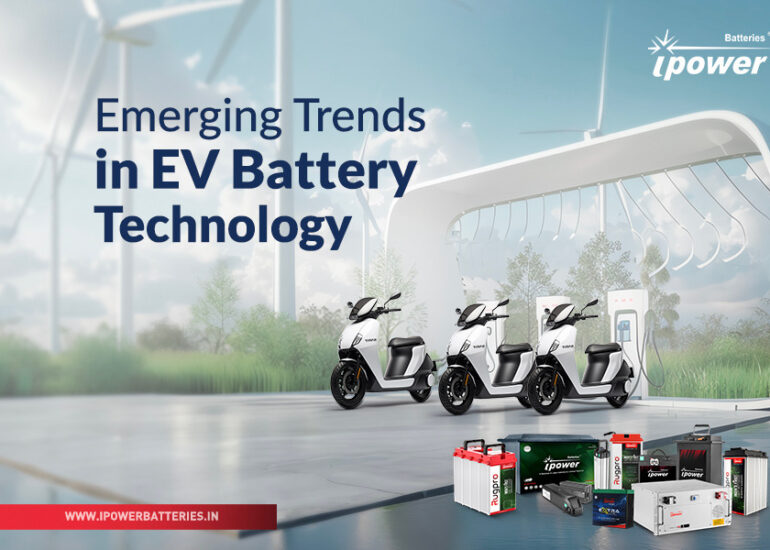
With electric vehicles growing, every EV battery manufacturer in India has a bigger role now.
It’s not just about making batteries and sending them out.
Now the focus is more on:
- Safety
- Performance in heat, dust, all that Indian weather stuff
- Long-term reliability
And things are changing pretty fast. Batteries today are already better than what we had a few years ago. And it’s only going to improve from here.
More Than Just a Battery
At first glance, it’s just a battery. Some cells, some movement, done.
But honestly, it’s doing a lot more behind the scenes.
It’s helping:
- Cut down fuel use
- Keep cities a bit cleaner
- Support drivers who depend on daily earnings
For many e-rickshaw drivers, this battery isn’t just a component. It’s directly tied to how much they make in a day. If the battery performs well, the day goes well.
Simple as that.
Conclusion
Once you get a basic idea of how Lithium Ion Batteries work, you start seeing them differently.
It’s not complicated when you break it down. Just ions moving back and forth, systems keeping things in check, and a setup that quietly powers everyday transport.
And as more people switch to electric, these batteries are only going to become more important.
FAQs
1. What are some advantages for lithium ion batteries for e-rickshaws?
They charge a lot faster, require low maintenance and come with very long life.
2. How long does a lithium ion battery for e rickshaw last?
3 to 5 years. Depending on the usage and care.
3. What does a BMS do in a lithium battery?
It manages the battery’s performance, keeps things safe, and makes sure all the cells are working properly together.