
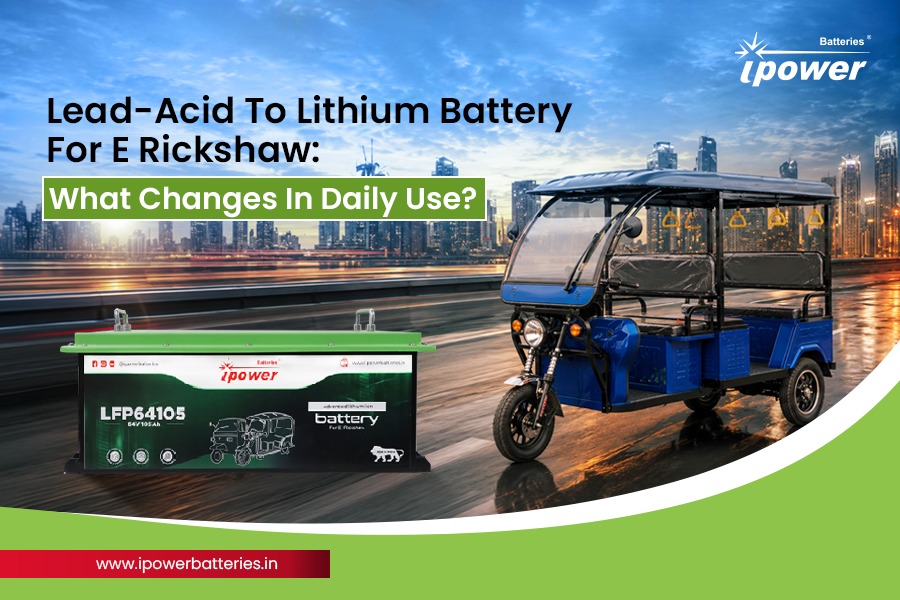
For an e-rickshaw driver, the battery is not just a vehicle part. It decides how many rides happen in a day.
With lead-acid batteries, most drivers know the routine already. Long charging hours. Heavy battery weight. Water topping. Backup dropping after some time. Pickup becoming weak when the battery is low.
The battery works, but it needs regular attention.
That is why many drivers and fleet owners now look at a Lithium Battery for E Rickshaw. The change is not only about using newer technology. It changes daily running in a practical way.
Faster Charging Means More Time On The Road
Lead-acid batteries usually take longer to charge. For a driver, that means the vehicle stays parked for more hours. If charging does not complete properly, the next day’s running suffers.
Lithium batteries charge faster when paired with the right charger. This helps the vehicle get ready sooner.
For a driver doing short local trips, this may not look like a big change. But for someone running all day, fewer charging breaks can directly affect daily income.
Still, charger matching is important. A lithium battery should not run on any random charger. Correct charging helps keep the battery safe and supports better battery life.
Lighter Weight Helps In Daily Running
Lead-acid batteries are heavy. That extra weight sits on the vehicle every day, along with passengers and road load.
A lithium-ion battery for e-rickshaw is lighter compared to a traditional lead-acid setup. This can help the vehicle feel smoother during regular running, especially in traffic, narrow lanes, and stop-start routes.
Weight is one part of the daily difference. Maintenance is another.
Less Maintenance Means Fewer Battery Headaches
Lead-acid batteries need regular care. Water level needs checking. Terminals need cleaning. Overcharging and undercharging can reduce life. If the driver ignores maintenance, backup starts falling faster.
Lithium batteries reduce many of these problems. There is no water topping, no acid handling, and no regular battery-side checking like old-style battery setups.
This does not mean the battery can be ignored completely. Wiring, charger quality, load, and installation still matter. But compared to lead-acid, a lithium e-rickshaw battery is easier to manage in daily use.
Backup Stays More Stable During Work Hours
One common complaint with old lead-acid batteries is performance drop during the day. The e-rickshaw may run fine in the morning, but later the pickup feels weak and the range starts reducing.
A good Lithium Battery for E Rickshaw gives more stable output when selected properly. It handles regular charge-discharge use better and supports daily commercial running more consistently.
This helps drivers who run long routes, carry passengers regularly, or work in crowded city areas where the vehicle stops and starts again and again.
Upfront Cost Is Higher
This point should be clear.
Lithium batteries usually cost more than lead-acid batteries at the time of purchase. So if someone only looks at the first bill, lithium may look expensive.
However, the real comparison should include charging time, maintenance, battery life, replacement cycle, and income lost when the vehicle stays parked.
If a lead-acid battery needs frequent replacement or causes regular charging breaks, the lower first cost may not stay low for long.
Why Ipower Lithium Battery Makes Sense
Ipower offers lithium battery solutions for e-rickshaw users who need dependable backup, lower maintenance, and better daily usability.
An e-rickshaw battery replacement should not depend only on price. The battery should match the vehicle voltage, daily route, passenger load, charging time, and usage pattern.
For drivers and fleet owners, the goal is simple: the vehicle should run properly, charge efficiently, and not become a daily problem.
Final Thoughts
Switching from lead-acid to lithium changes how an e-rickshaw works every day.
Charging becomes faster. Battery weight reduces. Maintenance becomes easier. Backup stays more stable. The upfront cost is higher, but the long-term value can be better for serious daily users.
For drivers who depend on their vehicle for income, choosing the right Lithium Battery for E Rickshaw can help reduce downtime and keep the vehicle ready for more working hours.