
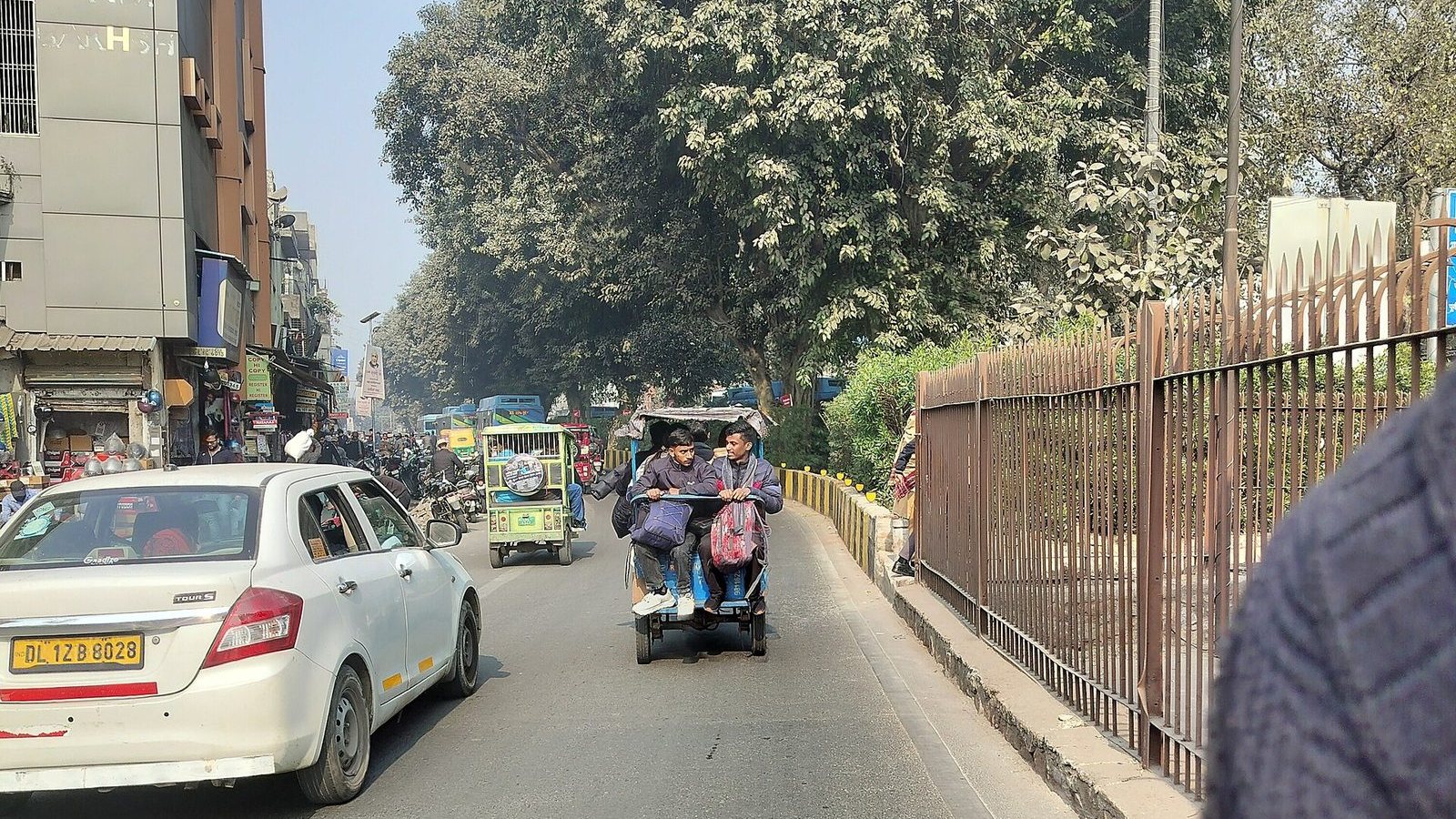
Walk through any transport hub in Delhi NCR, Lucknow, or Patna and you will see the same story playing out: e-rickshaw drivers queuing at charging points, calculating how many more trips they can squeeze out of the day before the battery gives up. For most of them, the battery is not just a component — it is the single biggest factor deciding their daily income.

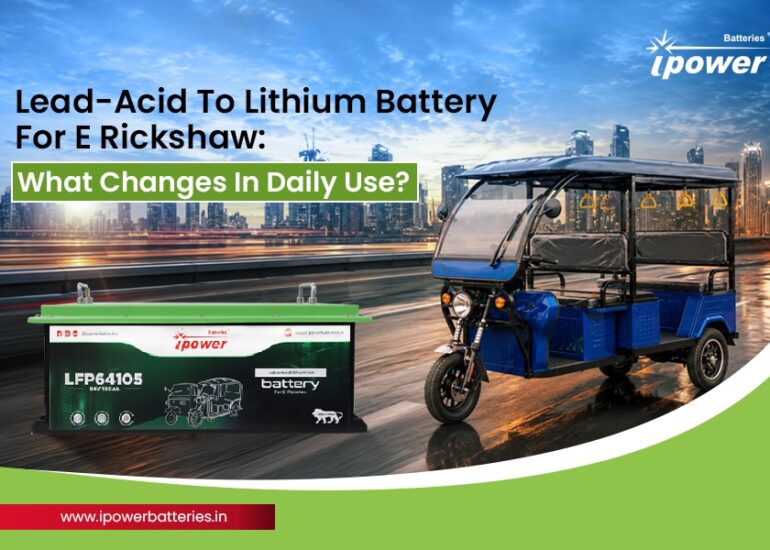
For over a decade, lead-acid batteries were the default choice. They were cheap upfront, familiar, and available everywhere. But the economics of last-mile electric mobility have changed, and lithium-ion technology — particularly LFP (Lithium Iron Phosphate) chemistry — is rewriting the maths. Here is what actually changes when you make the switch, based on what we see every day at our Kundli, Haryana manufacturing facility and across our 200+ sales and service centres in India.
1. Daily Range: More Trips, More Earnings
A typical lead-acid pack in an e-rickshaw delivers usable range that steadily shrinks with every charge cycle. Within 6–8 months, many drivers report losing 20–30% of their original range. Lithium-ion packs hold their capacity far longer.
Why? Two reasons:
- Depth of discharge. Lead-acid batteries suffer serious damage if discharged below 50%, so half the rated capacity is effectively off-limits. LFP batteries can safely use 80–90% of their capacity, trip after trip.
- Flat discharge curve. Lithium cells maintain voltage almost until the end of the charge, meaning the vehicle keeps its pulling power even at low charge — no more limping through the last hours of the day.
In practical terms, a driver who was doing 70–80 km on lead-acid can typically plan for 100+ km per charge on a comparable lithium pack — and keep doing so for years, not months.
2. Charging Time: Hours Back in the Day
Lead-acid batteries need 8–10 hours to charge and must be charged slowly to avoid damage. Lithium-ion packs charge in 3–4 hours, and partial charging does no harm — in fact, lithium chemistry has no “memory effect” at all.
That changes driver behaviour entirely. A quick top-up during lunch becomes a genuine range extension rather than a battery-killing habit. For fleet operators, it means the same charging infrastructure can serve two or even three shifts of vehicles.
3. Weight: Less Battery, More Payload
A lead-acid pack for an e-rickshaw commonly weighs 100–120 kg. An equivalent lithium pack weighs roughly one-third of that. Every kilogram saved on the battery is a kilogram available for passengers or cargo — and less strain on the motor, controller, and chassis. Drivers consistently report better acceleration and reduced tyre and suspension wear after switching.
4. Lifespan and Total Cost of Ownership
This is where the real story lies. Yes, a lithium pack costs more upfront — often two to two-and-a-half times the price of lead-acid. But consider the full picture:
| Factor | Lead-Acid | Lithium (LFP) |
|---|---|---|
| Typical life | 6–12 months | 3–5 years (1,500–2,000+ cycles) |
| Usable capacity | ~50% | 80–90% |
| Charging time | 8–10 hours | 3–4 hours |
| Maintenance | Regular water top-up, terminal cleaning | Virtually none |
| Weight | 100–120 kg | 35–45 kg |
Over a three-year period, an operator may replace lead-acid packs four to six times. Add the maintenance labour, the lost earning hours during long charges, and the resale-value hit from degraded performance, and lithium’s per-kilometre cost works out significantly lower — often by 30–40%.

5. Safety: Why the BMS Matters More Than the Cell
The number one question we hear: “Are lithium batteries safe in Indian summer conditions?” The honest answer is: a well-engineered lithium battery is safer than lead-acid — but engineering is the operative word.
Every Ipower lithium pack ships with an intelligent Battery Management System (BMS) that continuously monitors cell voltage, temperature, and current. It protects against overcharge, deep discharge, short circuits, and thermal stress. Our packs are certified to AIS-156 (Amendment III, Phase 2) — the Government of India’s stringent EV battery safety standard — and validated with tens of thousands of kilometres of on-road testing in real Indian conditions: heat, dust, monsoon humidity, and overloaded vehicles included.
LFP chemistry itself adds a safety margin: it is inherently more thermally stable than other lithium chemistries, making it especially well suited to three-wheeler duty cycles.
6. What to Check Before You Switch
If you are an e-rickshaw owner, fleet operator, or OEM evaluating the move to lithium, insist on the following:
- AIS-156 Phase 2 certification — not just a claim, but an ICAT certificate you can verify.
- A smart BMS with cell balancing and temperature protection.
- Local service support. A battery is a 3–5 year relationship. Ask where the nearest authorised service centre is and what the turnaround time is.
- Warranty terms in writing — including what is covered for capacity degradation.
- Proven road validation in your operating region, not just lab tests.
The Bottom Line
The switch from lead-acid to lithium is not just a component upgrade — it changes the daily economics of running an e-rickshaw: more range, faster charging, near-zero maintenance, and years of consistent performance. For drivers, that means more earning hours. For fleet operators, it means predictable costs and fewer breakdowns.
At Ipower Batteries, we have been manufacturing certified lithium-ion battery packs for e-rickshaws, e-carts, and e-cargo vehicles since 2019 at our 50,000 sq ft IMS-certified facility in Kundli, Haryana, backed by a government-recognised in-house R&D centre and one of India’s largest lithium battery service networks. If you are planning the transition, talk to our team — we will help you size the right pack for your routes, loads, and budget.
Planning the switch to lithium? Our team will help you size the right pack for your routes, loads and budget.